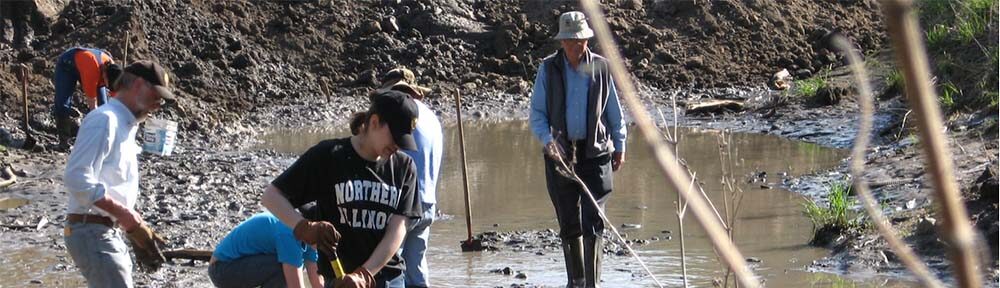
 One of the many mysteries we have about the sloth site is why we have so many more bones from the right side than left side of the adult. (The photo (below) is misleading—it comes from an outreach program where we had to spread the bones out so that viewers on the “bad” side had something to look at. The real difference isn’t absolute, but it’s striking.) There’s no intrinsic reason why the bones on one side of the sloth should have fossilized better than the other, so it must indicate something about the conditions near the time of death. (photo borrowed from)
 Did predators killed the sloths?
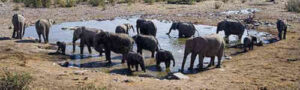 Can you explain the deaths of three sloths by anything other than some kind of catastrophe? In a drought herbivores congregate around the remaining water sources, and soon exhaust all the good forage near by. If the drought continues, eventually they die of malnutrition. Predators have plenty of meat available so they leave most of the carcasses undisturbed. Even scavengers that normally consume bones switch to soft tissue.
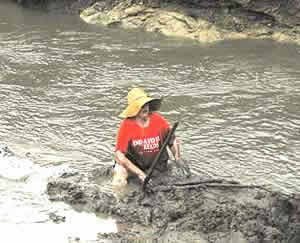 Heaven knows we’ve almost lost some students and one Bobcat operator to the muck at the site, but how reasonable is it to think a giant sloth could die that way? How about three sloths? Haynes (1988) has studied hundreds of elephant deaths and reports it’s actually not an uncommon event. Healthy adult elephants never have a problem even in the deepest thickest mud but very young animals and those who are ill or weak some times get stuck. He has also observed impala, Cape buffalo and black rhinos dying in this manner.
 Under normal conditions bones don’t start moving until they are completely disarticulated (Hill, 1975). A lot of researchers have tracked the decomposition of individual carcasses over time, but Hill picked out a large area in East Africa to study and recorded the status of disarticulation for every Topi, Damaliscus korrigum, a common medium-sized antelope, in his 475,000 square mile study area. He found a surprisingly consistent pattern.
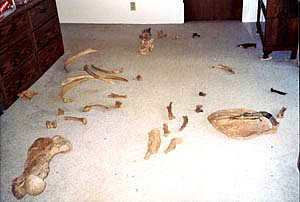 I’ve been studying an old photo Bob Athen took in 2002 of the bones he and Sonya had collected, spread out in their upstairs hallway and arranged as they originally found them. Like a fortuneteller staring at the leaves on the bottom of a teacup, I’m trying to figure out what, if anything, it means about the conditions at the time of death and where we should dig next.